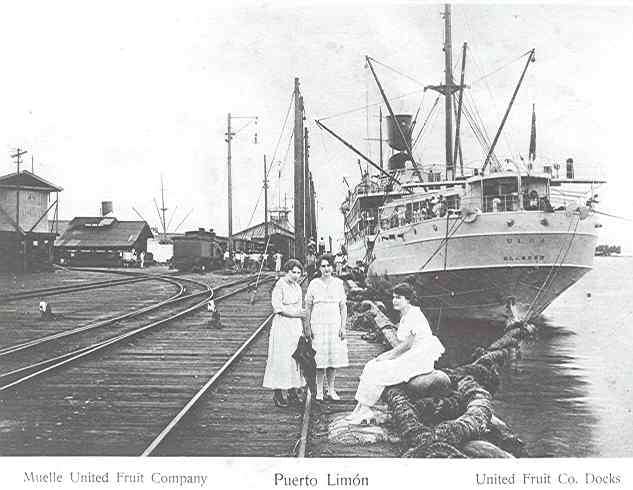
It is challenging to discern contamination in photographs. However, images allow us to trace processes and practices employed in spatial reorganization, revealing the linkages between environmental destruction and dependency on chemical substances. Although our focus is on Costa Rica, we have included pictures from United Fruit’s operations in Guatemala, Honduras, and Colombia to highlight the inherently transnational nature of the company’s perverse extractivist practices. Our main image sources in developing the project have been:
Archivo Nacional de Costa Rica: Located in Curridabat, San José, this institution preserves the nation’s documentary heritage, including historical records, maps, and photographs.
Archivo Nacional de Costa Rica
Biblioteca Nacional de Costa Rica (SINABI): Located in San José, this library offers a vast collection of publications and documents relevant to Costa Rican history and culture.
SINABI
Library of Congress: Located in Washington, D.C., this institution holds extensive international collections, including materials related to Latin American studies.
Library of Congress
United Fruit Company Photograph Collection at Harvard Library-Hollis Images: Situated in Cambridge, Massachusetts, this collection provides visual documentation of the United Fruit Company’s operations.
Harvard Library-Hollis Images
Digital Library at Tulane University: Based in New Orleans, Louisiana, this digital repository includes resources pertinent to Central American studies.
Digital Library at Tulane University
 Contaminated Forms